2026. 5. 7. 06:10ㆍ질환 정보 & 예방
First Published: May 2026

Last Updated: May 29, 2026
Author: Jennie (MPH · 40-Year Public Health Professional)
⚕️ This post is for general health information purposes only. Please consult a specialist regarding any surgical decisions.
📌 Table of Contents
- What I've Seen Over 40 Years: The Reality of Hip Pain
- What Is Total Hip Replacement? — The Basics
- The History of Hip Replacement Surgery
- Where We Are Today — How Far Has the Technology Come?
- Revision Surgery — Why It's Becoming More Important
- The Main Reasons Revision Surgery Is Needed
- When to Consider Surgery and How to Choose a Hospital
- Post-Surgery Care and Rehabilitation
- Frequently Asked Questions (FAQ)
- A Final Word
- References
1. What I've Seen Over 40 Years: The Reality of Hip Pain
Over 40 years working in public health, one of the most common things I heard was:
"My hip hurts so much I can barely walk. Is this just old age?"
In many of these cases, after proper assessment, the answer was hip joint disease. The hip joint — where the femur meets the pelvis — bears more load than almost any other joint in the body. When it breaks down, walking becomes difficult, and quality of life drops sharply.
As of 2025, South Korea's population aged 65 and over has surpassed 20% of the total. In our rapidly aging society, hip disease is now one of the most pressing public health issues.
Today, I want to share what I know from 40 years of fieldwork, backed by the latest peer-reviewed research, so you can make informed decisions about hip health.
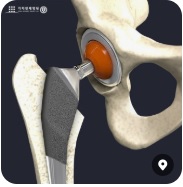
2. What Is Total Hip Replacement? — The Basics
Total Hip Arthroplasty (THA) is a surgery in which the damaged parts of the hip joint — the femoral head (the ball) and the acetabulum (the socket) — are removed and replaced with artificial implants made of metal, ceramic, or special plastic (polyethylene).
Main indications (when surgery may be needed):
- Severe osteoarthritis that has not responded to conservative treatment
- Avascular necrosis of the femoral head
- Hip fracture (especially in older adults)
- Rheumatoid arthritis affecting the hip
- Long-term complications from congenital hip dysplasia
Goals of surgery: Pain relief + Restored joint function + Improved quality of life
The Lancet famously described total hip replacement as "the Operation of the Century" — and for good reason. The evidence for its effectiveness is outstanding.
3. The History of Hip Replacement Surgery
Sir John Charnley's Revolution
The father of modern total hip replacement was British orthopedic surgeon Sir John Charnley (1911–1982).
According to a 2024 review published in Cureus (Phalak et al.), Charnley developed the "Low-Friction Arthroplasty" concept that laid the foundation for modern hip replacement. He combined a small metal femoral head, a polyethylene acetabular socket, and acrylic bone cement — dramatically reducing friction and extending the lifespan of artificial joints.
Before his innovations, hip replacement attempts repeatedly failed due to high friction and poor durability. Charnley's design became the global standard for orthopedic surgery.
A 2021 historical overview published in Orthopedic Reviews (Bota et al.) traces the full evolution of this surgery from early 20th-century experiments, through Charnley's 1960s breakthrough, to the advanced techniques used today.
4. Where We Are Today — How Far Has the Technology Come?
A comprehensive 2019 review by Professor Won-Yong Shon and colleagues, published in Hip & Pelvis (Shon et al.), summarizes just how far hip replacement has advanced:
① Cementless Fixation
Bone grows directly into the implant surface for a biological, cement-free bond. Better suited for younger, more active patients.
② Advanced Materials
- Ceramic-on-ceramic bearings: Extremely low wear rates, longer implant life
- Highly cross-linked polyethylene: Advanced wear-resistant plastic
- Thanks to these materials, implants can now last 25–30 years or more
③ 3D-Printed Custom Implants
Patient-specific implants designed to fill bone defects perfectly — especially useful in revision cases.
④ Minimally Invasive Surgery (MIS) and Robot-Assisted Surgery
Smaller incisions, faster recovery, and more precise implant positioning.
⑤ Cemented, Cementless, and Hybrid Options
The best approach is tailored to each patient's age, bone density, and activity level.
5. Revision Surgery — Why It's Becoming More Important
No matter how advanced the implants become, they don't last forever. Most hip replacements need to be replaced after 15–25 years.
With aging populations and increasingly active lifestyles, the demand for revision THA (re-operating to fix or replace a failing hip replacement) is rising fast.
Revision surgery is significantly more complex than the original procedure:
- Removal of existing implant + reconstruction of bone loss — simultaneously
- Higher risk of complications
- Longer operating time and recovery
However, outcomes are steadily improving with technological advances.
6. The Main Reasons Revision Surgery Is Needed
Based on the latest research data:
| Aseptic loosening | 53% | Implant-bone bond weakens without infection |
| Periprosthetic infection | 20.7% | Bacterial damage to surrounding tissue |
| Periprosthetic fracture | 16.9% | Bone breaks around the implant |
| Dislocation/instability | 7.5% | Joint repeatedly dislocates |
Modern Revision Techniques
Direct Anterior Approach (DAA): Muscle-sparing technique allowing faster recovery. However, it requires highly skilled surgeons and should be performed at specialized centers.
A 2021 systematic review by Singh et al., published in Hip & Pelvis, found that DAA for revision THA shows promising results in selected patients, but complication rates are lower when performed at high-volume expert centers.
Modular implants: Mix-and-match components for personalized reconstruction.
3D-printed grafts, antibiotic cement spacers, staged infection protocols, and robotic navigation are all part of the modern revision toolkit.
7. When to Consider Surgery and How to Choose a Hospital
When Should You Consider Surgery?
One of the most common mistakes I've seen over 40 years is waiting too long.
Consider consulting a specialist if:
- Conservative treatment (physical therapy, medication, injections) has not improved symptoms after 6 months or more
- Pain significantly limits daily activities (walking, climbing stairs)
- Night pain is severe enough to disrupt sleep
- X-rays show serious joint destruction
What to Look for in a Hospital and Surgeon
Surgical volume matters most. Research consistently shows that hospitals performing 100+ hip replacements annually have significantly lower complication rates.
Questions to ask:
- How many hip replacements does this hospital perform per year?
- Does the surgeon have experience with revision surgery?
- What is the hospital's infection control protocol?
- Is there a structured post-operative rehabilitation program?
8. Post-Surgery Care and Rehabilitation
Surgery is only half the battle. Rehabilitation is the other half.
General recovery timeline:
| Day of surgery | Begin walking (most patients walk the same day) |
| Weeks 1–2 | Regain basic daily activities |
| Weeks 4–6 | Walk freely indoors without assistance |
| 3 months | Light outdoor activity, begin gentle exercise |
| 6–12 months | Full return to daily life |
Post-surgery precautions:
- Avoid bending the hip beyond 90 degrees (dislocation risk)
- Do not cross your legs
- Recommended activities: swimming, cycling, walking
- Restricted activities: running, jumping, heavy lifting, high-impact sports
FAQ
Q. Is there an age limit for hip replacement surgery? A. Overall health matters more than age alone. Surgery has been performed successfully in patients in their 80s and 90s. However, older patients carry higher anesthesia and surgical risks, so a thorough consultation with your surgeon is essential.
Q. Can I have an MRI after hip replacement surgery? A. Most modern implants are made of titanium or cobalt-chromium alloys and are MRI-compatible. However, image artifacts may occur. Always inform the radiologist about your implant before any MRI.
Q. How soon can I walk after surgery? A. Most patients begin walking on the day of surgery. However, walking distance should be increased gradually according to your surgeon's instructions.
Q. Will my artificial hip last my entire life? A. With current technology, implants can last 15–25 years or more. Younger or more active patients may eventually need revision surgery.
Q. What activities can I do after surgery? A. Swimming, cycling, walking, and light hiking are generally encouraged. Running, skiing, and high-impact sports are usually restricted. Discuss your specific activity goals with your surgeon.
Q. Can both hips be replaced at the same time? A. Simultaneous bilateral THA is possible but carries higher complication risks. Most surgeons recommend staging the procedures — one hip at a time — with a recovery period in between.
A Final Word
Over 40 years in public health, I have seen countless lives transformed by hip replacement surgery.
Patients who came to me saying "I can barely walk anymore" were traveling and hiking freely just six months after their surgery. The advances in medical technology are truly remarkable.
But surgery is just the beginning. Choosing the right specialist, committing to rehabilitation, and maintaining healthy long-term habits are what determine lasting success.
If hip pain is affecting your quality of life, please don't just endure it. Seek a proper diagnosis and consultation from a qualified orthopedic specialist.
References
- Bota NC, Nistor DV, Caterev S, Todor A. Historical overview of hip arthroplasty: From humble beginnings to a high-tech future. Orthopedic Reviews. 2021;13(1):8773. DOI: 10.4081/or.2021.8773
- Phalak MO, Chaudhari AK, Chaudhari T, Birajdar A. Dr. John H. Charnley: An architect and pioneer of the modern era of hip replacement surgery. Cureus. 2024;16(9):e68832. DOI: 10.7759/cureus.68832
- Shon WY, Park BY, Rajsankar NR, Park PS, Im JT, Yun HH. Total hip arthroplasty: Past, present, and future. What has been achieved? Hip & Pelvis. 2019;31(4):179-189. DOI: 10.5371/hp.2019.31.4.179
- Singh G, Khurana A, Gupta S. Evaluation of direct anterior approach for revision total hip arthroplasty: A systematic review. Hip & Pelvis. 2021;33(3):109-119. DOI: 10.5371/hp.2021.33.3.109
✍️ About the Author Master of Public Health (MPH) | 40-Year Public Health Professional A public health expert with 40 years of hands-on experience in community health, public health centers, and health education programs across Korea.
📌 All information in this blog is based on peer-reviewed literature and official public health resources. Please consult a qualified medical professional for personal health decisions.
'질환 정보 & 예방' 카테고리의 다른 글
| MZ(2030)세대가 꼭 알아야 할 건강 적신호 10가지 / 40년 보건전문가의 경고 (4) | 2026.05.08 |
|---|---|
| 어버이날 부모님 건강 챙기기 | 노년기 흔한 질환과 예방·치료 전략 | 40년 보건전문가의 솔직한 고백 (2) | 2026.05.08 |
| 29주 임산부 분만 병원 찾지 못해 태아를 잃다/40년 보건전문가가 이 비극에서 배워야 할 것들 (0) | 2026.05.05 |
| 보건소 혈액검사, 이것까지 무료입니다 — 40년 보건전문가가 알려주는 숨겨진 혜택과 의사에게 꼭 해야 할 질문 7가지 (0) | 2026.05.05 |
| 오늘 밤 당신의 뇌는 스스로 청소하고 있을까요? — 수면의 뇌과학과 치매 예방의 충격적 연결고리 (0) | 2026.05.03 |